Freedom of the media

Freedom of the media

This Module focuses on the written press, radio and television broadcasting. The resources are organized according to the two principles that govern Media regulation -diversity and pluralism - and their meaning as applied to different mediums. The Module also includes readings that critically assess the role of the Media and of press freedom in contemporary societies and the digital challenges to the traditional Media business model.

8 items found, showing 41 - 8
Author: UN, OSCE, OAS and ACHPR Special Rapporteurs for Freedom of Expression
Media Type Icon

"This Joint Declaration addresses systematic or targeted attacks on freedom of expression which are aimed at silencing certain perspectives or voices, whether internationally, nationally or locally, and State responses to such attacks. Such attacks are perpetrated in different contexts, including of international and non-international armed conflicts, terrorist attacks and widespread organized crime."

UN, OSCE, OAS and ACHPR Special Rapporteurs for Freedom of Expression. Joint Declaration on Freedom of Expression and Responses to Conflict Situations, May 4, 2015.

Author: UN, OSCE and OAS Special Rapporteurs for Freedom of Expression
Media Type Icon

Joint Declaration on Freedom of Expression and the Administration of Justice, Commercialisation and Freedom of Expression, and Criminal Defamation

UN, OSCE and OAS Special Rapporteurs for Freedom of Expression.  Joint Declaration on Freedom of Expression and the Administration of Justice, Commercialisation and Freedom of Expression, and Criminal Defamation, December 10, 2002.

Author: UN, OSCE, OAS and ACHPR Special Rapporteurs for Freedom of Expression
Media Type Icon

Joint Declaration on the Overall Environment for Media and Elections and on Public Media.

UN, OSCE, OAS and ACHPR Special Rapporteurs for Freedom of Expression. Joint Declaration on Media and Elections, 15 May 2009.

Author: UN, OSCE and OAS Special Rapporteurs for Freedom of Expression
Media Type Icon

Joint Declaration on the Regulation of the Media, Restrictions on Journalists, and on Investigating Corruption.

UN, OSCE and OAS Special Rapporteurs for Freedom of Expression. Joint Declaration on the Regulation of the Media, Restrictions on Journalists, and on Investigating Corruption, December 18, 2003.

Author: UNESCO
Media Type Icon

The 2021/2022 World Trends in Freedom of Expression and Media Development report focuses on journalism as a public good, analyzing trends in media freedom, pluralism, independence, and journalist safety. The findings are based on data-driven analysis by UNESCO and Data-Pop Alliance, as well as original research by Economist Impact. The report highlights the importance of understanding journalism as a public good and its role in the wider conceptualization of information as a public good.

UNESCO. 'Journalism is a public good: World trends in freedom of expression and media development; Global report 2021/2022'. 2022. https://unesdoc.unesco.org/ark:/48223/pf0000380618?2=null&queryId=0a30ee11-7640-48c0-b1c3-8d7e1e5dc867

Author: Nic Newman
Media Type Icon

The report, written by Nic Newman and published by the Reuters Institute for the Study of Journalism with the support of the Google News Initiative, starts straightforwardly: it declares 2024 as “another challenging year ahead for journalism.” Artificial intelligence, the disruptions it delivers to the media sector, critical elections taking place around the world, and the continuing wars force journalists and media outlets “to rethink their role and purpose with some urgency.” Journalism content will face radical distribution changes due to Search Generative Experiences and AI-driven chatbots that will reduce media outlets’ audiences. The report includes findings from a survey conducted between November and December 2023 in which over 300 digital leaders from more than 50 countries and territories participated. Despite the grim forecasts, the report still offers ways for journalists and media to adapt, “Embracing the best of AI while managing its risks will be the underlying narrative of the year ahead.” In this podcast episode of the Reuters Institute for the Study of Journalism, Nic Newman discusses the report’s findings and more.

Nic Newman. Journalism, Media, and Technology Trends and Predictions 2024. Reuters Institute for the Study of Journalism, 2024. DOI: 10.60625/risj-0s9w-z770

Author: UNESCO, Rachel Pollack
Media Type Icon

This issue brief on ‘Journalism, Press Freedom and COVID-19’ is part of the UNESCO series ‘World Trends in Freedom of Expression and Media Development’. It highlights the key global trends in the implications of the COVID-19 pandemic on the freedom of the press and journalism. These trends include: “1) fueling the pandemic, a dangerous “disinfodemic” has arisen, 2) against soaring demand for verified information, independent media have risen to the challenge, 3) technology companies are taking action, but more transparency is needed, 4) some regulatory measures have led to new restrictions of human rights, 5) to keep the public informed, journalists are putting their own safety at risk, 6) the economic impact of COVID-19 may pose an existential threat to journalism, 7) amid the crisis, there are new opportunities to stand up for journalism.” The objective of the issue brief is for it to serve as referential guidance for UNESCO member States, civil society organizations, media outfits, and internet companies.

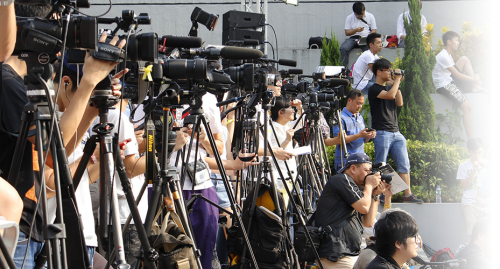
UNESCO, Rachel Pollack. “Journalism, Press Freedom and COVID-19”. 2020. https://en.unesco.org/sites/default/files/unesco_covid_brief_en.pdf

Author: Jonathan Day, Franziska Otto, Eva Simon
Media Type Icon

Civil Liberties Union for Europe released its fourth annual report, Liberties Media Freedom Report 2025. Based on the data provided by 43 partner organizations, the report covers the state of media freedom and pluralism, the safety of journalists, freedom of expression and access to information, and relevant legislation across 21 EU Member States. One of the main findings is high media ownership concentration (in Croatia, France, Hungary, Malta, the Netherlands, Slovenia, Spain, and Sweden). As the EU is approaching the stage of enforcement concerning its key press-related laws, the report calls on the EU bodies to cooperate with civil society and urges national authorities to ensure the proper transposition of the European Media Freedom Act and the Anti-SLAPP Directive into national legislation.

Jonathan Day, Franziska Otto, Eva Simon. Liberties Media Freedom Report 2025, Civil Liberties Union for Europe, April 2025. https://www.liberties.eu/f/oj-aem